
In the dynamic landscape of pharmaceuticals, where groundbreaking discoveries hold the key to addressing global health challenges, the integration of data analytics into drug discovery processes is proving to be a game-changer. The marriage of pharmaceuticals and data analytics is reshaping the industry, offering unprecedented insights, efficiency, and improved patient outcomes. This blog explores the pivotal role of data analytics in pharmaceutical software, emphasizing its importance, custom applications in drug discovery, impact on patient health outcomes, and the acceleration of drug development cycles, and includes case study snapshots highlighting real-world success.
Importance of Data Analytics in Pharmaceuticals
With its intricate processes and stringent regulations, the pharmaceutical industry has traditionally been cautious in adopting technological advancements. However, the surge in data analytics applications has compelled the industry to rethink its approach. Pharma analytics plays a crucial role in deciphering complex biological data, identifying potential drug candidates, and optimizing research and development (R&D) investments. By leveraging advanced analytics, pharmaceutical companies gain actionable insights, enabling them to make informed decisions at every stage of the drug development pipeline.
Custom Software for Research Data Analytics
In the quest for novel drug discoveries, pharmaceutical companies are increasingly turning to custom software tailored for data analytics. These bespoke solutions are designed to meet the specific needs of drug discovery processes, integrating seamlessly with existing workflows. Pharma custom software solutions like Konverge enable the aggregation and analysis of diverse datasets, from genomics to clinical trials, streamlining the identification of potential drug targets. This tailored approach enhances the precision and efficiency of drug discovery efforts, setting the stage for more targeted and effective pharmaceutical interventions.
Improving Patient Health Outcomes Through Pharma
At the core of pharmaceutical endeavors lies the ultimate goal of improving patient health outcomes. Data analytics contributes significantly to achieving this goal by facilitating personalized medicine and treatment plans. Through the analysis of patient data, including genetic information and treatment responses, healthcare professionals can tailor interventions to individual characteristics. This enhances the effectiveness of treatments and minimizes adverse reactions, contributing to a more patient-centric and outcomes-driven approach in healthcare.
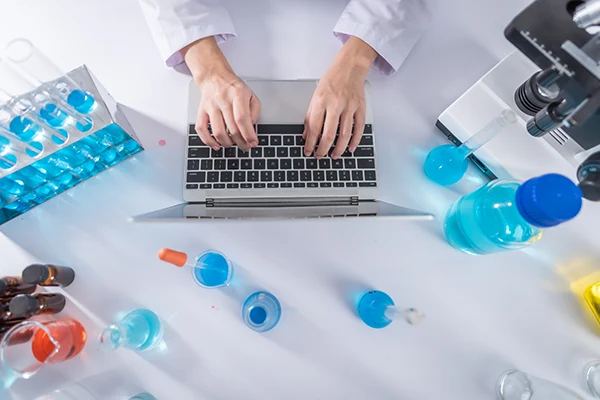
Accelerating Drug Discovery Cycles with Pharmaceutical Software
One of the notable impacts of data analytics in pharmaceuticals is the acceleration of drug discovery cycles. Traditionally, drug development has been a lengthy and resource-intensive process. With advanced analytics, researchers can harness predictive modeling and machine learning algorithms to identify potential drug candidates more efficiently. This shortens the time it takes to bring a drug to market and optimizes resource allocation, addressing the challenge of diminishing returns on R&D investments.
Leveraging Data Analytics in Pharma: A Case Study Snapshot
In the rapidly evolving landscape of pharmaceuticals, data analytics has emerged as a catalyst for innovation. Industry giants such as Pfizer and Moderna have embarked on ambitious AI projects spanning various stages of drug production. Data analytics promises to enhance each facet of pharmaceutical operations, from early research and drug discovery to marketing and sales. For instance, Pfizer’s groundbreaking prediction model identified transthyretin amyloid cardiomyopathy with an impressive 87% accuracy, enabling early detection and treatment initiation. On the other hand, Moderna leveraged Google Cloud’s Looker to enhance the diversity of its clinical trials and identify cost-saving opportunities. These real-world applications showcase the transformative power of data analytics, propelling the pharmaceutical industry into a new era of efficiency and discovery.
Future Trends in Pharma Data Analytics
As technology continues to evolve, the future of data analytics in pharmaceuticals holds exciting possibilities. The convergence of artificial intelligence (AI), machine learning, and big data analytics is expected to unlock novel insights and predictive capabilities. Predictive modeling for patient responses, advanced clinical trial designs, and real-time monitoring is poised to become standard practices, revolutionizing the way pharmaceutical companies approach drug discovery and patient care.
Learn More: Precision Pharma Operations: A Deep Dive into Batch Tracking Software
Conclusion
In conclusion, the integration of data analytics into pharmaceutical software is reshaping the landscape of drug discovery. The importance of data analytics in pharmaceuticals cannot be overstated, as it contributes to enhanced precision, efficiency, and patient-centricity. Custom software applications designed for research data analytics are proving instrumental in optimizing drug discovery processes. By improving patient health outcomes and accelerating drug development cycles, data analytics is propelling the pharmaceutical industry into a new era of innovation. As we look ahead, the future trends in pharma data analytics hold the promise of even more transformative advancements, solidifying the role of analytics as a cornerstone in the pursuit of groundbreaking medical solutions.
Book a Free Pharma Software Consultation
FAQs
Data analytics in drug discovery plays a critical role in processing and interpreting large volumes of biological, chemical, and clinical data. It helps researchers identify patterns, predict drug behavior, and speed up the identification of potential compounds. By using pharma data analytics software, scientists can reduce trial-and-error approaches and focus on more promising drug candidates. This leads to faster, more efficient, and cost-effective drug development processes.
Pharmaceutical software solutions for drug discovery streamline research by integrating data from multiple sources such as lab results, clinical trials, and genomic databases. These systems use advanced analytics and AI to simulate drug interactions, predict outcomes, and identify risks early. This reduces the time required for traditional laboratory testing and helps researchers make data-driven decisions that improve success rates in new drug development.
Data-driven decision-making in pharma allows companies to move away from guesswork and rely on evidence-based insights. By analyzing historical research data, clinical trial outcomes, and patient responses, pharmaceutical companies can optimize drug formulations and improve safety profiles. This approach also reduces development costs and increases the likelihood of regulatory approval, making the entire drug development lifecycle more efficient.
Modern pharma data analytics platforms use technologies such as artificial intelligence (AI), machine learning (ML), big data processing, and cloud computing. AI and ML help predict molecular behavior and drug efficacy, while big data tools manage large-scale datasets from clinical studies. Cloud-based systems enable real-time collaboration among research teams, improving accessibility and speeding up innovation in drug discovery and development.
Cost reduction in drug discovery is achieved by minimizing failed experiments and optimizing research pathways. Data analytics helps identify ineffective compounds early in the process, preventing expensive late-stage failures. It also improves clinical trial design by selecting better patient groups and predicting outcomes more accurately. These efficiencies significantly lower the overall cost of bringing a new drug to market.
Despite its benefits, pharma data analytics implementation faces challenges such as data quality issues, integration of multiple data sources, and regulatory compliance requirements. Ensuring data privacy and security is also critical, especially when dealing with sensitive clinical information. Additionally, pharmaceutical companies often need skilled data scientists and advanced infrastructure to fully leverage analytics capabilities.
The future of data analytics in pharma software is expected to be driven by AI-powered predictive modeling, real-time clinical data analysis, and personalized medicine. Advanced algorithms will help tailor treatments to individual patients based on genetic and lifestyle factors. Integration with wearable devices and IoT health systems will further enhance real-time monitoring, making drug discovery more precise, efficient, and patient-centric.