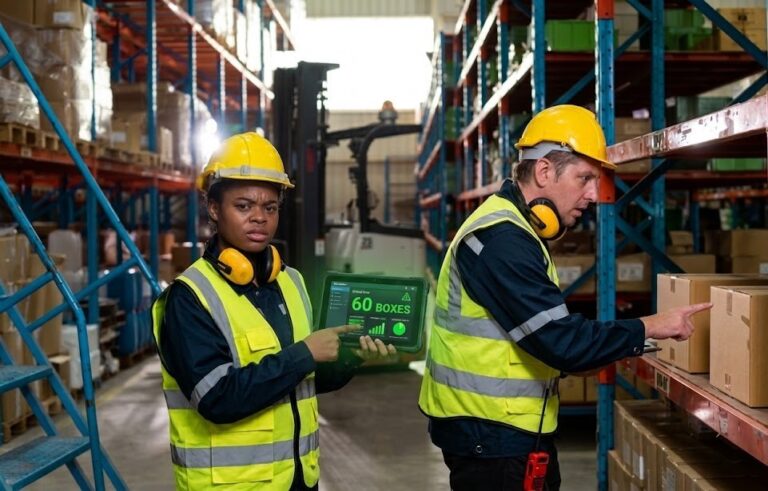
There is a specific kind of frustration that happens in boardrooms and leadership meetings across every industry. A senior leader pulls up the executive dashboard, looks at the numbers, and says: “This does not match what I’m hearing from the floor.”
The dashboard says inventory is healthy. The warehouse manager says they are running out of a critical component. The dashboard says production is on track. The plant supervisor says there have been three unplanned stoppages this week.
The technology is working perfectly. The problem is the data feeding it.
Executive dashboards fail not because of bad design. They fail because the data behind them is outdated, incomplete, or disconnected from what is actually happening in the business. And when leadership cannot trust the dashboard, they stop using it and go back to asking people directly, which defeats the entire purpose.
What a Dashboard Is Supposed to Do
At its best, an executive dashboard is a window into the current state of the business. It gives leaders the information they need to make fast, confident decisions without requiring them to pull reports, attend status meetings, or chase down individual contributors for updates.
Think of it like the cockpit of a commercial aircraft. Pilots do not look out the window to check altitude and speed. They look at instruments that give them real-time, accurate readings. Those instruments are only useful because they reflect what is actually happening right now. A cockpit that showed last hour’s altitude reading would be useless at best and dangerous at worst.
Executive dashboards are the same. When they reflect current reality, they are powerful tools. When they lag behind it, they become noise.
The Most Common Reasons Dashboards Stop Delivering Value
Data Is Pulled on a Schedule, Not in Real Time
Many enterprise dashboards are built on batch data processes. Data is pulled from source systems every few hours, overnight, or weekly, aggregated, and loaded into the reporting layer. By the time a leader looks at the dashboard, they are looking at a snapshot of the past.
For slower-moving decisions, this is acceptable. For operational decisions in logistics, manufacturing, construction, or field operations, it is not. A logistics operation where the dashboard shows shipment status from six hours ago cannot make reliable rerouting decisions. A manufacturing floor where production metrics update overnight cannot respond to intraday bottlenecks.
Real-time dashboards require real-time data pipelines. That means API integrations that capture events at the source and push them to the reporting layer immediately.
Systems Are Not Talking to Each Other
Most enterprises run multiple operational platforms. A separate system for logistics, a different one for production, another for customer management, and another for finance. When these systems do not share data, the dashboard has to be built on top of multiple disconnected sources.
The result is a dashboard that shows each system’s data in isolation. Leaders get a view of logistics performance. A separate view of production. A separate view of customer status. But they never see how these things interact, which is usually where the most important operational insights live.
A fully connected dashboard that draws from integrated systems shows the relationships between operational metrics, not just the metrics themselves. When production output drops, does it affect on-time delivery? When customer returns spike, does it correlate with a specific supplier batch? These questions are only answerable when the underlying systems are connected.
The Dashboard Was Built for Reporting, Not Decision-Making
There is a meaningful difference between a dashboard that reports what happened and one that supports decisions about what to do next.
Most executive dashboards are built to answer the question: what happened last period? Charts showing monthly revenue trends, quarterly production volumes, year-over-year comparisons. This is useful for board reporting, but it is not what operations leaders need to run the business day to day.
Operational dashboards should answer: what is happening right now, where are the exceptions, and what needs my attention? This requires a different design approach, one built around alert thresholds, exception flags, and drill-down capability that lets leaders move quickly from a high-level signal to the specific operational detail behind it.
Custom software development for executive reporting is not about building a prettier chart. It is about building the right information architecture so that leaders see what matters when it matters.
Nobody Owns the Dashboard After Launch
Dashboards are not set-and-forget tools. Business priorities change. New metrics become important. Old metrics lose relevance. Data sources evolve. Processes change.
When nobody owns the dashboard after the initial build, it slowly drifts out of alignment with the actual needs of the business. Metrics that were relevant two years ago are still being tracked. New operational realities are not reflected anywhere. Leaders stop trusting it because it no longer reflects how the business actually works.
Effective executive dashboards have a clear owner who reviews relevance regularly, adjusts to changing business priorities, and ensures the underlying data remains accurate and current.
What Real-Time Operational Visibility Actually Enables
When executive dashboards work as intended, they change how leadership operates.
Decisions move faster because leaders are not waiting for someone to compile a report. They see the information they need in the moment they need it.
Exceptions surface automatically. Instead of operational problems being discovered in weekly reviews, the dashboard flags them in real time. Leaders can respond while there is still time to prevent impact rather than after the damage is done.
Cross-functional patterns become visible. When data from multiple operational systems feeds into a unified view, leaders can see relationships between performance indicators that would otherwise be invisible. This is where the highest-value operational insights typically emerge.
Field teams and remote operations become manageable. For businesses with distributed operations, mobile-connected field systems that feed data back to central dashboards in real time give leadership visibility into what is happening on the ground without requiring constant communication overhead.
Industries Where Real-Time Operational Visibility Matters Most
Logistics and Supply Chain
In logistics, conditions change by the hour. Shipment delays, carrier exceptions, customs holds, route disruptions. A dashboard that reflects yesterday’s data cannot support the operational decisions that need to be made today. Real-time visibility is not a competitive advantage in logistics. It is a requirement.
Manufacturing and Industrial Operations
On a manufacturing floor, production stoppages, equipment failures, and quality issues need to surface immediately. The longer a problem goes undetected, the more expensive it becomes. Real-time dashboards that connect to production equipment and operational systems allow plant managers to see issues as they develop, not after they have cascaded.
Construction and Field Operations
In construction, project status, crew deployment, equipment utilization, and safety incidents all need to reach project leaders without delay. When field data only flows to leadership through end-of-day reports, the operational window to intervene shrinks dramatically.
Healthcare and Pharmaceutical
In healthcare and pharmaceutical environments, compliance status, batch progress, and quality indicators need real-time visibility. Delayed reporting in these environments is not just an operational problem. It is a regulatory one.
FAQs
Most fail because the underlying data is outdated, disconnected, or no longer aligned with how the business actually operates. The technology is rarely the problem. The data architecture and ownership model behind it usually are.
A reporting dashboard answers what happened. An operational dashboard answers what is happening now and what needs attention. Most executive dashboards are built for the former when operations leaders need the latter.
It requires real-time data pipelines from source systems, API integrations that capture events at the moment they occur, and a reporting layer that updates continuously rather than on a batch schedule. The data architecture matters as much as the visualization layer.
This varies by industry and business model, but the most valuable metrics are those that directly connect to operational decisions. The test is simple: if a leader sees this number change significantly, does it trigger a decision or action? If yes, it belongs on the dashboard. If not, it is reporting rather than operational intelligence.
Costs vary significantly based on the number of data sources, integration complexity, and the level of real-time capability required. A well-scoped custom dashboard project for a mid-size enterprise typically ranges from a few months of development effort to a larger multi-phase initiative for complex multi-system environments.
Typically a combination of the IT team, who owns the technical infrastructure and data pipelines, and a business-side owner, usually in operations or business intelligence, who owns the metric definitions, relevance review, and alignment with leadership priorities.