Technology is something that shapes our lives in so many ways today that it is almost impossible to imagine life without it. From the earliest use of simple tools to today’s cutting edge technological marvels, its fast expansion is evident, and we’re all going along for the ride. You can find all sorts of new technology globally, so let’s take a look at some of the most impactful and important ones out there today.
Artificial Intelligence (AI)
Artificial intelligence is probably the most important and ground-breaking trend in technology today. The fact that we have created machines and systems that can think for themselves is truly astounding, and the trend shows no signs of slowing down. AI can already be found in your own pocket, with the Apple iPhone’s Siri being a perfect example. The advent of smart homes, smart cities, and the Internet Of Things means that AI will be integrated more and more into our everyday lives. It’s the stuff of science fiction being made into reality, and it’s happening right before our very eyes.
Online Streaming
You can largely thank Netflix for the exploding trend of online streaming that is taking hold of the way we entertain ourselves. Today there are entire movies and television shows that are available exclusively on Netflix, Amazon Prime, and other online streaming services, that people enjoy immensely. Cable television could soon be a thing of the past if the online streaming craze continues to grow.
Virtual Reality (VR)
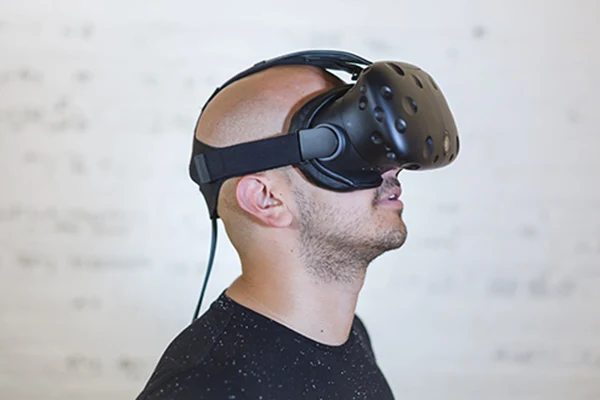
Virtual reality is an exciting trend in technology that is making it possible for us to experience things such as entertainment and learning in a whole new way. VR is a great technological trend that is making waves in the entertainment industry, with video games and other platforms hopping on the bandwagon. VR is also a great way to train and educate, especially when it comes to important work that needs to be done with a pair of hands; practicing something with the use of VR is an excellent way to receive hands-on training without any risk or consequences if mistakes are made.

Augmented Reality (AR)
In 2019, AR saw its record growth. This interactive experience allows information such as images or texts to be superimposed in a real-world environment. Mobile AR-enabled devices and mobile AR apps are introduced to new users daily as novel ways of shopping and solutions for enterprises that include mixed reality settings to their traditional training methods. AR applications will continue to improve and will certainly play an important role in how we interact with our environments and reality.
On-demand Apps
Today, people are getting more and more used to having everything available to them on-demand by using one smartphone app or another. Uber and food delivery apps are some of the most noticeable players in this rapidly growing tech trend. As time goes on, and more of these apps are created, we may very well see the way we live our day-to-day lives change in a very dramatic way.
It’s certainly an exciting time to be alive if you are a tech junkie, and you can definitely look forward to these trends growing even more in the years to come. Technology is one of the greatest things we have in life, and as long as we continue to further it in a responsible and forward-moving manner, the future will be full of even more technological wonders.

Custom Software Development
With new advancements in technology, it’s easy to get lost in a sea of products and services. Custom software can give you an edge over your competitors. Pivot to the world of today. With a unique, quality bespoke software product or mobile application that can be tailored to your needs, you can elevate your business in a whole new way. Interested in Konverge’s collaborative approach? Request a consultation today.
FAQs
Image recognition technology is a form of artificial intelligence (AI) that enables systems to identify objects, people, text, or patterns within images or videos. It works by using machine learning and deep learning algorithms, often trained on large datasets of labeled images. These systems analyze visual data pixel by pixel, detect patterns, and match them against known models. Modern computer vision systems can recognize faces, classify objects, and even interpret complex scenes with high accuracy, making them widely used in industries like healthcare, security, retail, and automotive.
One of the biggest advantages of image recognition AI is automation. It reduces the need for manual image processing and improves speed and accuracy. Businesses use it for tasks like quality control in manufacturing, facial recognition for security, and visual search in e-commerce. It also enhances customer experience by enabling features like automatic tagging and personalized recommendations. In healthcare, image recognition helps detect diseases from medical scans faster than traditional methods. Overall, it improves efficiency, reduces human error, and enables data-driven decision-making.
Despite its benefits, image recognition technology has several limitations. It requires large amounts of labeled data for training, which can be expensive and time-consuming to collect. Accuracy can also be affected by poor image quality, lighting conditions, or unusual angles. Another concern is privacy and ethical risks, especially when used in surveillance or facial recognition systems. Bias in training data can lead to unfair or incorrect predictions. Additionally, implementing advanced AI systems can be costly for small and medium-sized businesses.
Computer vision applications are widely used across multiple industries. In retail, it powers visual search and automated checkout systems. In healthcare, it assists in analyzing X-rays, MRIs, and CT scans. Security systems use it for facial recognition and surveillance monitoring, while the automotive industry applies it in autonomous driving for object detection. Social media platforms also use image recognition to tag photos and filter content. Its versatility makes it one of the most impactful AI technologies today.
The accuracy of modern image recognition systems has improved significantly due to advances in deep learning and neural networks. In controlled environments, accuracy can exceed 90–95%, especially for tasks like object detection and facial recognition. However, real-world performance can vary depending on lighting, image quality, and dataset diversity. Continuous model training and improved AI architectures are helping reduce errors, but no system is entirely perfect. Businesses must still validate outputs for critical use cases.
One major concern with AI-powered image recognition is privacy. Systems that analyze faces or personal images can potentially be misused for surveillance or unauthorized tracking. There are also concerns about bias, where algorithms may perform poorly on certain demographic groups due to unbalanced training data. Ethical AI development requires transparency, proper data governance, and compliance with privacy regulations. Many organizations are now adopting responsible AI frameworks to ensure fair and secure usage.
The future of image recognition and computer vision is expected to be more accurate, faster, and deeply integrated into everyday applications. Advancements in AI models will improve real-time processing capabilities, enabling smarter autonomous systems, enhanced medical diagnostics, and more intelligent retail experiences. Integration with technologies like edge computing, augmented reality, and IoT will further expand its use cases. As the technology evolves, balancing innovation with ethical responsibility will remain a key priority.