It’s the end of 2025, and the smartest companies aren’t just reflecting on their software. They’re preparing. The most successful businesses in 2026 won’t be reactive. They’ll be executing plans that are already in motion. So, what are they building?
In this forward-looking playbook, we break down the software priorities already on the whiteboards of innovative teams—and how you can get ahead by building the right tech now.
1. AI-Enabled Workflows (That Solve Real Problems)
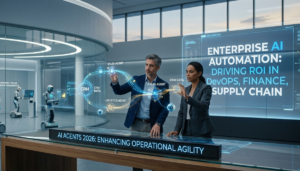
AI is no longer a buzzword. It’s a competitive advantage. In 2026, businesses won’t just be experimenting with AI. They’ll be operationalizing it.
Smart companies are building:
- Predictive software tools for demand forecasting
- Automated customer service with contextual understanding
- Smart analytics dashboards with real-time decision support
Takeaway: Don’t build AI for the hype. Build it to eliminate friction.
2. Custom Internal Platforms That Scale With You
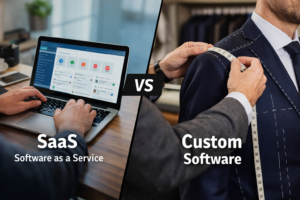
Off-the-shelf tools are getting maxed out. Growing businesses are ditching one-size-fits-all apps for internal platforms that evolve with them.
Smart companies are building:
- Unified ops platforms that integrate HR, finance, and workflows
- Lightweight CRMs tailored to real sales cycles
- Modular ERP systems that adapt as needs change
Takeaway: If your tools are slowing you down, it’s time to build your own.
3. Customer Portals with Built-In Personalization
Users now expect self-service. But in 2026, they’ll expect personalized self-service. Think Amazon-level UX in B2B.
Smart companies are building:
- Dashboards that adjust based on behaviour
- Account portals with proactive alerts and recommendations
- Micro-experiences driven by user data
Takeaway: The future of UX is personalization, starting with smart data integration today.
4. APIs & Data Infrastructure That Enable Speed
2026 will belong to the fast and the flexible. You can’t afford to wait weeks for integrations or insights.
Smart companies are building:
- API-first architectures for faster launches
- Data pipelines that sync across tools and teams
- Event-driven systems for real-time customer engagement
Takeaway: Velocity wins. Build your tech stack to move faster.
5. Compliance-First Platforms (Because Regulation Is Coming)
With AI and data-driven tech exploding, so is regulation. Smart companies aren’t waiting for laws to catch up. They’re preparing now.
Smart companies are building:
- Tools with privacy by design (GDPR, HIPAA, SOC2-ready)
- Transparent consent frameworks for end-users
- Systems that can adapt quickly to policy changes
Takeaway: Compliance will separate leaders from lawsuits. Build with trust in mind.
Final Thought: Don’t Wait for the Future, Build It
The companies that will win in 2026 are already building in Q4 of 2025. They’re not waiting for perfect conditions or VC funding but taking action.
At Konverge, we help companies build smart, scalable software that aligns with their business goals—and anticipates what’s next. From AI-driven tools to scalable SaaS platforms, we’ve got the strategy and the code to make it real.
Ready to start building your 2026 success story? Let’s talk.
FAQs
The 2026 software playbook refers to the strategies and technologies that forward-thinking companies are adopting to stay competitive. It includes building scalable systems, leveraging AI, adopting cloud-native architectures, and focusing on data-driven decision-making. Businesses are prioritizing flexible and future-ready software solutions that can evolve with changing market demands.
Smart companies in 2026 are building custom platforms, AI-powered applications, automation tools, and integrated digital ecosystems. These solutions focus on improving efficiency, enhancing customer experiences, and enabling real-time insights. Many organizations are also investing in SaaS platforms and internal tools tailored to their specific operations.
Custom software is becoming more important because businesses need solutions that align closely with their workflows and goals. Off-the-shelf tools often lack flexibility and scalability. Custom-built systems provide better integration, control, and the ability to innovate faster, giving companies a competitive edge in rapidly evolving industries.
AI is transforming software development by enabling automation, predictive analytics, and intelligent decision-making. Businesses are integrating AI into applications to improve efficiency, personalize user experiences, and analyze large datasets. This leads to smarter systems that can adapt and improve over time.
Cloud computing plays a critical role by providing scalable infrastructure, flexibility, and cost efficiency. It allows businesses to deploy applications quickly, manage data securely, and scale resources based on demand. Cloud-native development also supports faster innovation and easier integration with other systems.
Businesses can stay competitive by continuously evaluating their technology stack, adopting new tools, and investing in custom solutions where needed. Focusing on automation, data analytics, and user experience also helps companies improve efficiency and customer satisfaction. A proactive approach to digital transformation is key.
The future of business software will focus on intelligent automation, real-time data processing, and highly personalized digital experiences. Technologies like AI, machine learning, and IoT will continue to drive innovation. Businesses will increasingly rely on adaptable and scalable systems to remain agile in a rapidly changing digital landscape.